Television is rather a frightening business. But I get all the relaxation I want from my collection of model soldiers.
Peter Cushing

Sunday, 30 November 2014

Alas for the Fallen

I moved house ten months ago; previous to that, all my wargames, roleplaying and painting stuff was in storage. I'm now finally unpacking stuff.

And a lot of it is missing.

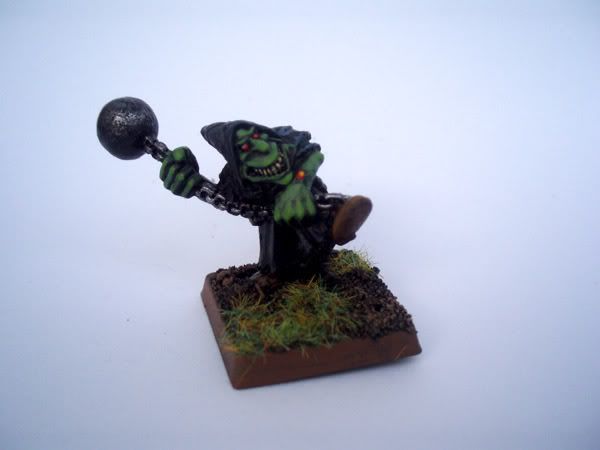
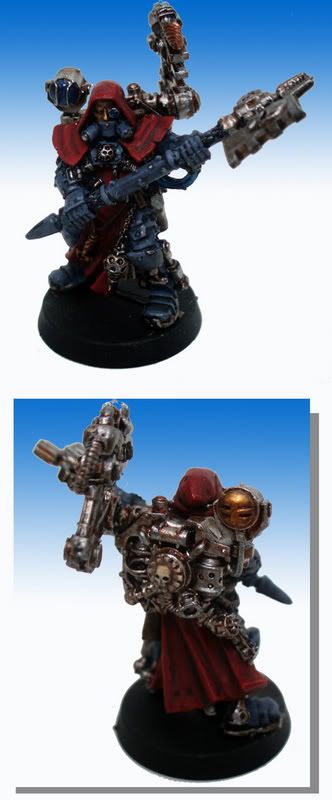
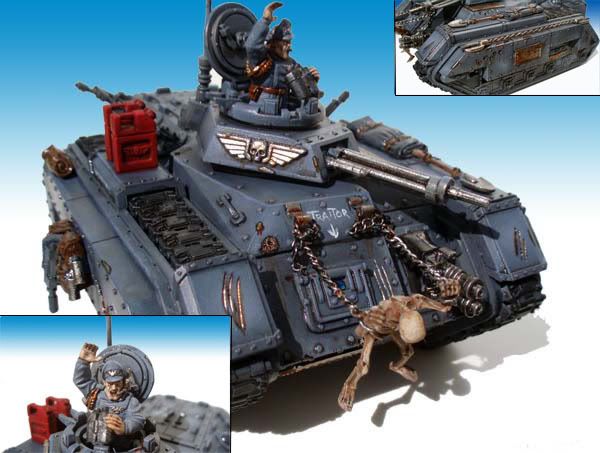
Did it get thrown out? Lost in storage? I don't know. But here I wanted to share some images of my lost comrades so at least they are not forgotten:


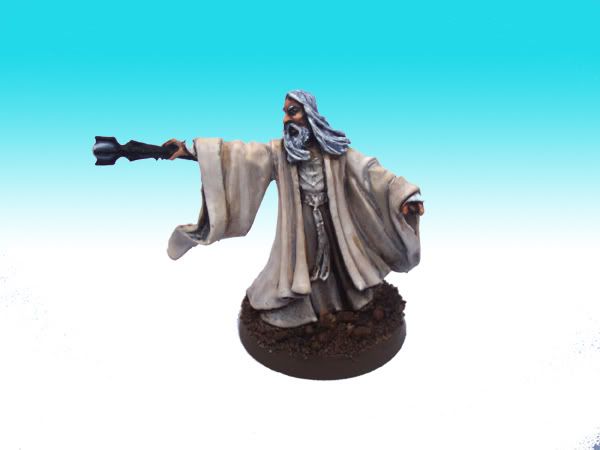
The saddest thing is that some of the ones I'm most proud of I don't seem to have any images of at all. The Sauruman you see up there is probably the best technical paintjob I've ever done (not that you can tell from the poor photo - this was long before I got into photography) with many layers of glaze and wet blending but the same session resulted in a Grima that was just as good - no images at all. 

More worrying, given my recent declaration of how to deal with my midlife crisis, I can't find my Bloodbowl Team anywhere. So if you'll excuse me, I'm off to drown my sorrows with scotch and painkillers. 

Injured in Battle and an unexpected present

In case anyone is wondering why my posts for the last couple of weeks have been focused on D&D rather than miniatures the answer is quite simple; in the ongoing Parenting War I have been injured.


Hauling a toddler and a baby around has resulted in a very bad back which has meant that I've not been able to assume the usual Hobby Position - don't lie, you all know the one: hunched over a table or over a tray in front of the TV - and so there's been no painting or construction.

However, the lead pile has grown. She Who Must Be Obeyed has been keeping an eye on Facebook recently where people have been selling lots of surplus stuff in the run up to Christmas and, when I returned home from work one day I was presented with these two:


Upon opening, I discovered this:


They were sold as bits, but close inspection shows at least 20 or so Space Marines, 7 Orks, 20 or so skeletons, some Tau, some Dwarves and a huge amount of scenic bits and pieces. There basically enough detail bits here to power a dozen vignettes - as long as I don't mind doing some 40K stuff - as well as two large cases in which to keep my own bits. I think that was a pretty good haul for £25!

Friday, 28 November 2014

Here be Dragons

This is part of a continuing strand of worldbuilding blogs for my nascent D&D 5th Edition game. If you're only here for the wargames, modelling and painting, feel free to skip on to the next entry. 

So, but considering money and British history, I have some details roughed out for how my world is going to work on a social level. But the big question remains - what about the dragons? This is really shorthand for how does magic effect the world.

Although, to be fair, dragons are pretty cool on their own.

On a metaphyscial level, D&D has always operated on the assumption that the world operates on normal physical laws with magic sort of laid over the top; it's easy to think of it in computer terms as being a back door that allows casters to hack the code of reality and do things that normal users can't. This is made more or less explicit in a little boxout in the 5th Edition PHB. I'm happy to work with this - after all, I want these new players to get a proper D&D experience.

So, how does magic work here? I'll cover this in a few sections.

Dragons

Ok, they're too big to ignore and they are pretty iconic, so we need to deal with them. I'm happy to have them as a sentient race - after all, I have a dragonborn cleric in the party. So let's deal with them on that basis. We know that we've got our Roman analogue elves in the backstory and they have a slave-based economy - which certainly fits with Fitz-Badger's comment under the last post about the Mirkwood influence; I can certainly imagine Thranduil putting the Dwarves to work. So that's how Dragons got here - dragon slaves were used as transport and heavy cavalry in much the same way that Claudius threw a few elephants into the British campaign. I also live the visual of ruined 'docking towers' dotting the landscape where the sky-triremes were once berthed as part of the Empire's trade routes. 

When the Fall came, some of them were left behind; and through some means that we can explore at another juncture this led to some form of interbreeding - probably some sort of cult, it usually is - which results in the dragonborn. There was probably a small number of dragons left behind which makes them rare and interesting. I'll fiddle around the edges of this concept to come up with a reason for wyverns - after all, what is my Wales analogue without a red dragon? - but this gives me a way to have them around but without taking the world too far from our basis.

Halflings and Gnomes

Yeah, I'm going to go with the Jewish Mediaeval model here. Not the purges and the discrimination - although that might produce some good story seeds if I decide to play that card - but by having them as dispersed populations without a homeland. They'll need some sort of service or goods that they can provide, analogous to the moneylending of the middle ages, but I might leave that until I've got a handle on religion. Whatever it is will be cultural rather than race-based as there's nothing in the PHB that jumps out at me as a big enough hook.

Magic Users

Yeah, this is the big one. I'll deal with clerics in another post as that requires me to get to grips with religion which is a bigger question than we have here.

The Wizard player has already mentioned in play the 'Head of [his] Order' so I know there must be more than one order of casters. Normally I could flail around for a while with that but the nice thing about working with D&D is that rules presuppose certain things about every setting. To whit:


  • There are three types of arcane Spellcaster: Wizards, Sorcerers and Warlocks. So that's my orders sorted out.
  • Magic items can be created - interestingly, in 5th, non-magic users can create certain potions if they are proficient in the apothecary skill. I see no reason why non-spellcasting smiths couldn't make magical weapons or armour - after all, if it's good enough for Mime in the Ring Cycle, it's good enough for me. 
  • Teleportation Gates can be made permanent quite simply. This has, I think, a far reaching effect on the game world, unless it is strictly controlled. Thankfully, by skipping forward slightly in my pillaging from history, I can quite easily put in a method of social control for such power - I'll put it under the control of a Guild. I can't take full credit for this idea - after all, it's pretty much the same solution Frank Herbert came up with. 

So, for my world, I can quite comfortably add the following:

The Guild of Journeymen: controls teleportation gates in ever major city. Only Guild casters know the sigil keys for these gates and these are the main trade routes for major merchants. This had a brilliant knock on effect - it leaves the roads and rivers as the only routes affordable by minor merchants and so is ripe for smuggling and wilderness adventures. After all, if most of the King's taxes are collected at the Journeymen's Gate, he has no need to pay for expensive patrols on the roads out and about the place.

There will be three main orders of casters; the Witan (Wizards), with the name stolen from the Old English for 'to know'; the Trowe/Faithbreakers (the first being what they call themselves, as in true to Things with which they have made pacts, and the latter being the literal translation of Warlock); and finally the Scinlaecan (middle english for Sorceress). For this to work practically, we're looking at a Guild-type system again, a closed shop of magic users in which unapproved magic is frowned upon. I imagine some people employed by the Orders as witchfinders, whose job it is to find magic users and bring them 'in from the cold'. I can't imagine these being anything other than figures of fear, sweeping into villages and hauling away talented children. I've always preferred innocuous names for bad guys, so lets call them Gatherers.

Horror

I'm actually incapable of running a game without some horror elements. As I alluded to in the last post, I ran Call of Cthulhu for more years than I can comfortably count on a weekly basis. So, where can I slip in some horror? Well, we'll obviously have some Grendel-influenced trolls and other beasties in the fens and moors, but that's just a case of presentation rather than content. It's not Lovecraftian by any means.

Baked into the rules system of the Warlock is the idea of the pact with an Other - be it a fiend, an Old One or the Fey. But what is all magic was simply accessing the powers of unknowable Things From Before Time? What if, every time magic was used, the fabric of our current reality which keeps them at bay was weakened? And that pretty much gives me a cosmological reason to start introducing Arboleths, Beholders and Ithilids into the milieu. At some point, our Wizard will have to realise that every piffly little Magic Missile he casts brings the destruction of the entire world one step closer, until he realises that he has almost unlimited power but is too afraid to use it... And that's Lovecraftian horror.

That's pretty much it for the moment - the next couple of posts will be miniatures based while I wait for the next game session. By seeing how the characters play I'll gain a bit more cultural information about their races and classes.

As aways, let me know in the comments what you think and I'll nick the best ideas.
Sunday, 23 November 2014

Money makes the world go 'round

In which we continue our worldbuilding for D&D. If this has no interest to you, feel free to skip and move on to the next post which will have some undead action. 

Sticking with the philosophy that we build our world from the ground up it make sense to start by thinking about the thing which is closest to the hearts of all adventurers: cash.

Looking to history, Dark Ages money is a weird thing. There's a fairly strong historical consensus that for around a century money stopped being used for day to day activities as the roman coinage slipped into disuse. This is very interesting but probably not useful for gaming purposes - our heroes want portable cash and it's only in fairly static societies that barter can work.

In the later Anglo Saxon period, we know that Offa in Mercia started minting gold shillings - so there's my Gold Pieces. There were silver pennies, but that leaves me a bit short for coppers. So if I call the silvers farthings (which comes from fourths so doesn't really make sense but I'm going to bet my players don't know that) and I'm left with copper pennies.

This leaves me with platinum and electrum pieces to deal with; I'm going to ignore electrum as they're frankly a bit silly. But what to do with the top of the tree, the platinum piece...? Remember those roman coins that are still floating round up until the 700s? We're going to have some Siliquae floating around in our world.

But where do they come from? I'm glad you asked. The Heptarchy has a lot of little twiddly bits around the edges that only make sense when you remember that a lot of the administrative bits and pieces were left over from the Roman occupation. So do we have any advantages from having a fallen empire in our world? In a world, yes. Why? In a word, dungeons.

Ruins scattered around the landscape gives us some ruins for the adventurers to go and rob; lost treasures, ancient technology, forgotten - and forbidden - lore... Yes, a fallen empire gives us a lot of bang for our buck.

In traditional fantasy settings, Elves and Dwarves tend to be portrayed as elder races. So they were here first - our ersatz Romans. I like the idea of having the Elves being the fallen, imperialist state as it gives them a slightly different flavour to usual. This then casts the dwarves as the Greeks, scholars, philosophers and seekers after knowledge. I like that.

So where does that leave us?

The humans are the original inhabitant of our landmass, conquered several centuries ago by the Elvish empire (which will be a militaristic, slave-based society). They brought with them a few tribes of dwarves as administrators and technicians. The Empire fell, and the forces withdrew. Why did it fall? Dunno yet - I can flesh that out later. Outside invasion is the obvious analogue with actual history, but internal decay and decadence fits quite well with modern elvish tropes so I can play with that later.

We have some remnants of their forces left; the ones who 'went native' - our bardic, Celtic welsh-analogues, based in the kingdoms of the West (which tells me the direction the nearest landmass must be). So culturally, my markers for them are set Romans with Druidic overlays and welsh language. My cultural markers for the Dwarves are now set as Greek but skinned with Norse trappings. That's enough for me as GM to wing anything I need to or to start planning if I get the sense that my players want to engage with broader political stories.

More importantly, I now have a reason and a style for ruins, tombs and even deserted towns to dot the land. The remnants of a once bustling Imperial Colony which has contracted in the last few centuries as the human kingdoms have fought to establish themselves in the power vacuum.

The next update will be based around the human cultures - and weaving in some horror elements. You don't run Call of Cthulhu every week for a decade without it leaving a mark.

Small World

So a quick note about how I built my world. The biggest mistake people make is building a world that feels vast. They want the EPIC FANTASY EXPERIENCE. That's fine, but you have to ask yourself - how long are you going to play this game for? How far are the characters really going to go?

I once ran a campaign where I started with just a village and a wood; we then built the world from there as we went along, with each player contributing the history of their people. This kind of co-creation is great, but I was going to be playing this with three people who'd never played an RPG before - hence my choice of D&D 5th Edition. So I needed a framework.

Talent borrows, genius steals, we get it off the back of a lorry, no questions asked.

Realistically, I need a world that has a few kingdoms rubbing up against each other for political intrigue and the risk of war; I want some empty space for monsters and bandits and what have you; I need enough room to have some different races and cultures; and I'd like to have an area for 'noises off' - that is, an external threat that I can use for an epic threat if I need.

The solution is, therefore, this:


This is my world; it's rough, hence the crossings out, and bits and pieces will be added or moved around as the game progresses - until the characters have actually been there, it doesn't really exist in a concrete form.

Now, I know I have a few History teachers who read this blog, so you'll be recognising quite a few of the names. I have, of course, nicked Anglo-Saxon Britain almost wholesale.

Here's the seven kingdoms of the so-called Dark Ages, known as the Heptarchy:


Some of the names track across quite easily; I've given all of Northumbria back to one of the ancient kingdoms that made it up, Deira; I've shifted the kingdoms of Wales up north a little and dumped all of Scotland into 'The Northlands' which is basically shorthand for Here Be Dragons.

My basic thinking is as follows; there's enough linkages between bardic and druidic culture for me to call the Elves Welsh and declare victory, so that's a win. I'll take the isle of Anglesey and use that for something magical. Dwarves like mountains, so I'll stick them in the Pennines. 

I can then use Anglo-Saxon and Old English language to name stuff, giving me the feel of a coherent culture with no back-breaking labour - so Mere for lake, the northern forest is called Northweald and so forth. 

At this point, I start stealing stuff from the players. One of them has made a Dwarf and given it a Nordic sounding name. So the dwarf mines get Nivleder as a name, a corruption of Niflheim crashed into Anglo-Saxon. The Cleric has chosen a thunder god, so I can start building a pantheon around the old Pagan gods and so forth... you get the idea. 

And up north? Well, I'm calling them the Skald so you can probably work out what they're going to be.

And that's enough to begin with - because now I have a sense for how this world works, I can zoom in on one area to start with. And where better than God's Own Country, Yorkshire? Or Deira, in this case.

So here's the map for the first area. 


I've started with the first major settlements; I'm then going to steal settlement patterns from the Domesday Book because - again - why keep a dog and bark yourself? This means that I can very quickly get a sense for any given area and add the fantasy trappings to make it work. 

That's it for the moment; if you want to hear more about how I'm going to cheat my way to a calendar, religion, culture and history let me know in the comments. 

Saturday, 22 November 2014

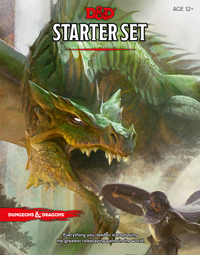
Interregnum - A Review of Dungeons and Dragons: The Lost Mines of Phandelvar

Just a quick note in two parts about my first go at running a roleplaying game in a decade.


Part the First: the game


The new edition of D&D is lovely. It's jettisoned a large amount of clutter from the rules; although it's kept that awful class and level system - although that does have a certain retro charm - the rest of it very much feels like a game that's taken  notice of the evolution of rulessets over the last twenty years.

The use of a D20 makes the odds very unpredictable - there's a huge amount of swing in combats and skills checks; the advantage mechanism - which is a bloody brilliant bit of design - mitigates this somewhat but I've added to that with allowing players to use Inspiration for rerolls.

And Inspiration - we're dealing with an edition of D&D which mechanically rewards players for playing their characters. We're through the looking glass, here.

The Lost Mines is an adventure that comes in the starter box. It's neat, well structured and has a good balance of set-pieces and sandbox freedom that is an excellent introduction to the concept of roleplaying for novices. I can imagine a new GM being a touch overwhelmed by it as I've already had to go quite fast and loose with some elements to make it flow. There is one encounter about halfway through that is going to kill any party that rushes in where angels fear to tread -- which I'm all in favour of.

Basically, if anyone is umm-ing and ahh-ing about buying this new edition, go for it. You won't be disappointed.

Part the Second: the play's the thing


So, we have 3 players. A female Religious Studies teacher; a male RS teacher; and a male IT Network Manager and Web Designer. Respectively, they created a Dwarf Fighter, a Dragonborn Cleric and a Human Wizard. As they hadn't had any RPGs under their belt before, I decided to give them the full experience and have them meet in a tavern.

It didn't go well.

The dwarf threw nuts at the head of the dragonborn; when the cleric went over to batter the 'shortarse runt', the wizard tripped him up -- with a crit, no less. Things went rapidly downhill from there.

I actually missed a trick here - I should have locked them all up and played it as The Usual Suspects; but alas I am rusty and missed the chance. Anyway, by an NPC resorting to bribery, I managed to get them escorting a wagonload of supplies up north.

They traveled for a day without speaking to each other.

They camped the night without speaking to each other (and didn't post a piquet - if that happens again I shall destroy them with a wandering beastie of some description).

The dwarf seems to be developing a drinking problem.

Thankfully, a goblin ambush provided something of a common enemy; party relationships were not helped by the fact that the wizard took out more than the Cleric who is operating under the assumption that he is an effective warrior - he's yet to see the Dwarf fighter go The Full Gimli.

Anyway, we left it where they were heading into the Goblin hideout in pursuit of that most noble of all adventurers - loot.

So basically it took them three hours to go from never having played D&D to breaking into someone's home to nick their stuff. I'd say that counts as a success, wouldn't you?

So my question is - I need some good miniatures for the characters. Any suggestions for the following (and you know I'm happy to convert and sculpt as required):


  • A male human wizard, aged and bearded, robed, quarterstaff and with a pointy hat - no brim. 
  • A male dwarf with a two-handed warhammer, slung shield and chainmail. Flagon of ale would be nice but not essential.
  • A male dragonborn cleric in chainmail with a two-handed warhammer, slung shield. Wings would be nice but not a dealbreaker.


Any thoughts gratefully appreciated.

I promise I'll stop the D&D posts soon and get back to the wargaming - I have another WFB match coming up.

A Field In England

"Hold fast!" Creedence Hopkins called to his compatriots and the evil spawn shambled closer. "The Lord Christ is with us!"

Forsaken Smith snorted, "I'd rather 'twere Richard Ingoldsby's men." With a crack his pistol discharged and he cocked the second one.

Hopkins raised his Holy Bible and stared down the hill at what had once been his friend. He drew in a might breath and roared, "In the name of God, GO!"


*****

Well, it's done; and I'm quite pleased with it; we can think of it as a very late Zomtober entry.

If you've been keeping up with the construction blogs, you've seen how this came together bit by bit.


The last stages were sticking the miniatures into the base after the base coat. I then added some gravel and blended the painting in.


The last stage was adding the foliage; varying it between static grass, clump foliage and long grass to create a more natural feel.

Here's some more shots of the final piece - when I took the photos the last few bits of loose grass and what have you were stuck to the miniatures. That's been blown off now.


I'm happy with the painting of the miniatures and I'm quite pleased with how the tree turned out although my sculpting skills are still not really up to scratch. I like the effect of the different landscaping materials and I'll use that again.

I'd like to thank Mr Michael Awdry of the 28mm Victorian Warfare for putting me on to Tamiya Clear Red for the blood and everyone who has stopped by and offered their support.

I just need to paint the edges of the base black and then it's done. And then? This and the Dinosaur model will be being donated to the school library next week in the hopes that they might inspire some Small Person to pick up a paintbrush or a book.

On to the next project!